martes, 22 de octubre de 2013

I TALLER/WORKSHOP GEE-MX LAB, CIAUP- Facultad de Arquitectura, UNAM, 13-15 noviembre 2013


Gracias a todos los que asistieron! 
Se subirá la RESEÑA CRÍTICA SOBRE EL EVENTO en enero de 2014


TIPOLOGÍAS COGNITIVAS: EMOCIONES, ESPACIO, HOSPITALIDAD E INDUSTRIA DEL CONOCIMIENTO

Hugo Hopping, The Winter Office, Dinamarca

Más información:
https://www.facebook.com/pages/GEE-MX-Lab/145872445456144
geemx.lab.unam@gmail.com


viernes, 2 de agosto de 2013

FLESH AND STONE. THE BODY AND THE CITY IN WESTERN CIVILIZATION


RICHARD SENNETT´S history of emotions approach: 

" Flesh and Stone is a history of the city told through people´s bodily experience: how women and men moved, what they saw and heard, the smells that assailed their noses, where they ate, how they dressed, when they bathed, how they made love in their cities from ancient Athens to modern New York. Through this book takes people´s bodies as a way to understand the past, it is more than an historical catalogue of physical sensations in urban space. Western civilization has had persistent trouble in honoring dignity of the body and diversity of human bodies; I have sought to understand how these body-troubles have been expressed in architecture, in urban design, and in planning practice. 

I was prompted to write this history out of bafflement with a contemporary problem: the sensory deprivation which seems to curse most modern building; the dullness, the monotony, and the tactile sterility which afflicts the urban environment. This sensory deprivation is all the more remarkable because modern times have so privileged the sensations of the body and the freedom of physical life. When I first began to explore sensory deprivation in space, the problem seemed a professional failure - modern architects and urbanists having somehow lost an active connection to the human body in their designs. In time I came to see that the problem of sensory deprivation in space has larger causes and deeper historical origins". 


Sennet, Richard ( 1996) , Flesh and Stone. The Body and the City in Western Civilization, New York - London: W.W. Norton & Company. 

miércoles, 8 de mayo de 2013

sábado, 21 de enero de 2012

URBAN IMAGINARIES OF MEXICAN VICTIMISM : THE IMAGES OF SILENCE ( Dossier thématique : Mexique : espace urbain et résistances artistiques et littéraires face à la « ville générique », Artelogie II, num. 2, enero 2012)


Artículo completo en: http://www.artelogie.fr/


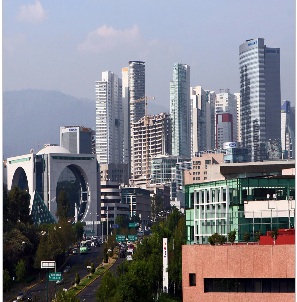
Universe can be thought as an enormous mountain range in which stars are the visible highlands. All the rest, the slopes, the hillsides covered by the mist, is dark matter. We can´t see it, but it is just right there, beneath the shiny peaks. Mexico City, a megalopolis of more than twenty million people, is quite a universe. Not exactly the modern urban setting that since the thirties historians like to imagine as a Musilian city, that industrial world where people are pressed and pour among roofs, buses and fading industrial lights, as Georg Heym would express. Nor is it a tropical impressionist scenary where an epic past and a (in)dependant future seems to apply to Paul Ricoeur´s postcolonial paradox : how to become modern and turn back to origins ; how to deal with the revival of an old civilization and still be a modern one. Yet, we can be certain that Mexico City is a modern city.  It has the proper clear hights of modernity (including generic imaginaries) just as it veils a silent complex dark matter : the modern invention of a victimist identity.


Johanna Lozoya, Artelogie, enero 2012, RSS 2.0 | ISSN 2115-6395